A pan earns its place by making dinner easier. For buy it for life cookware, the useful question is which surface you will enjoy cooking on and maintaining. Cast iron and carbon steel reward a seasoning routine; uncoated stainless steel suits a different set of habits.
Our starting recommendation: choose a Lodge skillet for an inexpensive introduction to seasoned cookware, De Buyer carbon steel for someone who enjoys frying and maintaining a patina, or uncoated stainless steel for an everyday kitchen where sauces feature heavily. Buy one useful piece first if your other pans still do their jobs.
This guide compares construction and ownership requirements using manufacturer care information. For knives, utensils, and appliances, see our 10 BIFL kitchenware picks.
Compare the materials before choosing a brand
| Material | Choose it for | Ownership tradeoff | Start here |
|---|---|---|---|
| Seasoned cast iron | Searing, skillet baking, and a modest first-pan budget | Weight; hand washing, drying, and seasoning | |
| Carbon steel | Frying and cooks who like a seasoned surface | Acidic sauces can remove seasoning; handles affect oven use | |
| Uncoated stainless steel | Sauces, simmering, and a kitchen without a seasoning routine | Food release takes practice; sets can include sizes you rarely use | |
| Uncoated aluminum bakeware | Cookies, roasting, and sheet-pan meals | Hand washing; prolonged acidic contact can damage the surface |
These are different tools. A baking sheet complements a skillet, while a cupboard full of similar frying pans may add little to the way you cook.
Lodge cast iron: an affordable pan to learn and keep
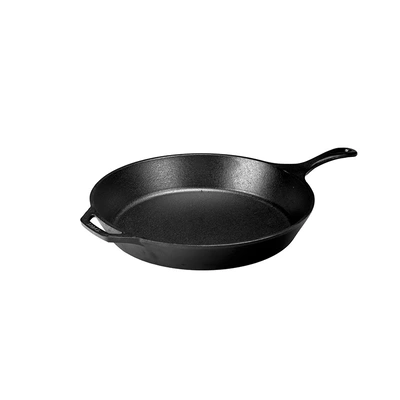
An affordable start for searing and skillet baking.
$20– $30Buy NowSee product detailsChoose Lodge if you want a pan for searing and oven dishes and are comfortable lifting it when full. Pick the diameter around your burner and usual portions. A larger skillet that barely fits the sink is not necessarily an upgrade.
The case for long ownership is the renewable seasoning. You can maintain the surface instead of relying on a factory coating to stay pristine. Lodge's care guidance allows a little soap, followed by drying and a thin application of oil. Our cast iron care guide covers the routine in more detail.
Choose something else if: the weight makes daily cooking awkward, or you want to put every pan straight in the dishwasher.
De Buyer carbon steel: for cooks who will maintain the surface
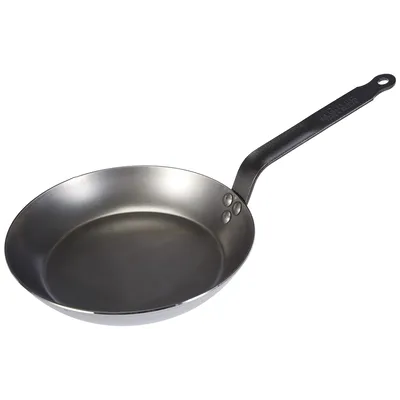
For regular frying and cooks who like building a patina.
$50– $80Buy NowRead the full reviewCarbon steel is worth considering if frying is a regular part of your cooking and you like the idea of building a patina. Its appearance changes with use; an uneven color is not a reason to chase a replacement.
The maintenance commitment is real. De Buyer explains that acidic ingredients can remove seasoning. Keep another pan for long tomato or vinegar-based simmers. Also follow the seasoning instructions for your particular range: different handles have different oven limits.
Choose something else if: you mainly cook acidic sauces or want a cooking surface that needs no seasoning. Read our De Buyer review for a closer look.
Uncoated stainless steel: decide whether you need a set
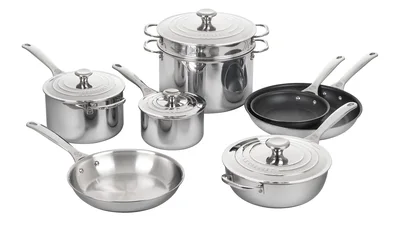
For equipping a kitchen with several useful stainless steel pans.
$500– $800Buy NowSee product detailsStainless steel deserves a place on a BIFL cookware shortlist when you want a versatile cooking surface without a seasoning routine. The Le Creuset Tri-Ply set uses an aluminum core between stainless steel layers and works on induction, according to the maker's stainless steel care and use guidance.
A set is a substantial purchase. Write down the pan sizes you use for a normal week's meals, then compare that list with the pieces included. Count lids separately from cooking vessels when weighing up a set's value. If you only need a frying pan, buying several saucepans as well can consume your budget and storage without improving dinner.
Ownership habit: let hot pans cool before washing. Le Creuset warns that sudden cooling can warp the base; its uncoated stainless range is dishwasher-safe, but stuck food can often be loosened by soaking.
Nordic Ware Naturals: the useful addition beyond pots and pans
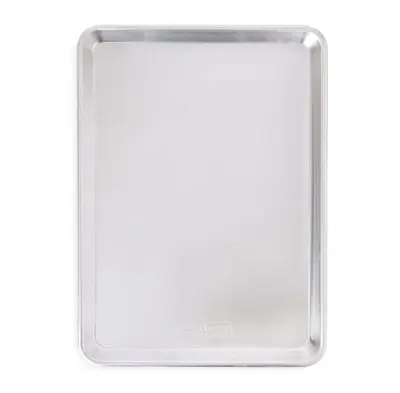
A versatile tray for frequent roasting and baking.
$20– $40Buy NowSee product detailsIf roasting vegetables and baking cookies are weekly jobs, a good sheet pan may get more use than another saucepan. The uncoated Naturals half sheet is worth a look for those jobs. Measure the oven rack and storage space before choosing the size.
Nordic Ware recommends hand washing. Its guidance distinguishes cosmetic dishwasher discoloration from damage caused by prolonged contact with acidic ingredients. Use parchment, a suitable baking mat, or grease according to the recipe rather than expecting a nonstick coating.
Build a small cookware collection around your meals
- Mostly searing and roasting: start with a skillet and a baking sheet. Add a saucepan only when your meals call for one.
- Lots of sauces, soups, and pasta: prioritize useful stainless steel saucepan sizes and a pot that fits your household.
- Frequent frying: consider a seasoned pan if its maintenance fits your cleanup routine.
- A first kitchen or wedding gift: ask what is already owned. A missing pan in the right size is more useful than a duplicate set.
For Black Friday, decide on the material and size before browsing promotions. A reduction on an oversized set does not make it better suited to your kitchen. Our Black Friday shortlist includes smaller upgrades alongside larger purchases, and the gift guide helps match a kitchen present to its recipient.
Common BIFL cookware questions
Do I need expensive cookware for it to last?
No. The Lodge skillet is the lower-cost starting point in this comparison. Spending more can buy different construction, sizes, or convenience, but the right material and a care routine you will follow matter more than completing a matching set.
Is a lifetime warranty enough to choose a pan?
Use the cooking surface, handle, fit, and care instructions to make the decision. A warranty is useful support, but it does not make a heavy skillet easier to lift or a saucepan the right size for your burner.
Should I replace every nonstick pan at once?
Build the collection around actual needs. Try one uncoated pan for the meals that suit it and learn how it behaves before spending on a full set. You may find that a smaller, mixed collection works better.